Archives for April 2019

Colorful Salad Ideas for Spring

By: Dr. Alyssa Musgrove, Pathways to Healing

Our bodies require a rainbow of nutrients for optimal health, and eating a variety of colors is one way to achieve this fundamental health goal. It can be easy to fall into the same eating routine once you find foods the entire family likes, but the truth is our bodies benefit from food variation. Children, especially, need a diversity of foods in their diets and adults benefit, as well.

Eating an assortment of colored fruits and vegetables is the best way to receive a complete range of the vitamins and minerals your body needs in order to function. Each fruit and vegetable has a distinctive color that indicates an abundance of unique nutrients. The range of vitamins, minerals, antioxidants and phytochemicals in fruits and vegetables have enormous healing powers that can help our bodies thrive.

This week, try buying a new fruit or vegetable that is not usually on your shopping list and find a way to incorporate it into a meal. Below are a few of my favorite nutrient-dense salad recipes to help you get started.

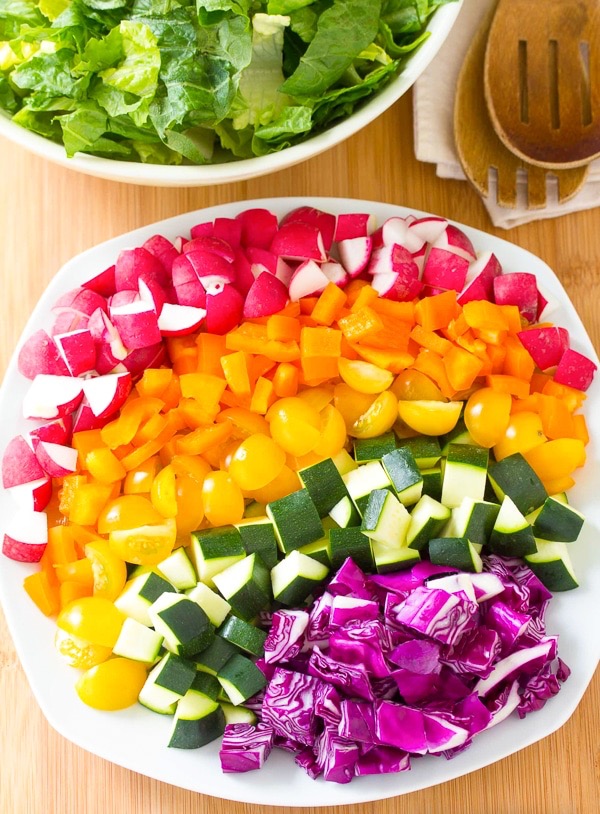
Rainbow Chopped Salad with Avocado Vinaigrette
Salad:
8-10 red radishes, chopped
1 orange bell pepper, seeded and chopped
½ pint yellow cherry tomatoes, quartered
2 small zucchini, chopped
¼ small red cabbage, chopped
1 head romaine lettuce, chopped

Avocado vinaigrette:
1 soft avocado, peeled and pitted
½ cup chopped fresh parsley
1 tablespoon chopped fresh oregano
2-3 cloves garlic, minced or olive oil
2 tablespoons honey
½ teaspoon salt
½ teaspoon crushed red pepper
¼ cup avocado oil
2 tablespoons rice vinegar
¼ cup water, add more as needed

Place all vinaigrette ingredients in blender until smooth, taste and salt as needed. Chop all vegetables and toss together with dressing in a large bowl.

Colorful Kale salad
1 bag of organic kale or baby kale
1 tub of pomegranate seeds
Slivered almonds, pecans or walnuts
Crumbled feta or goat cheese
Healthy vinaigrette to taste

Toss all ingredients and enjoy.

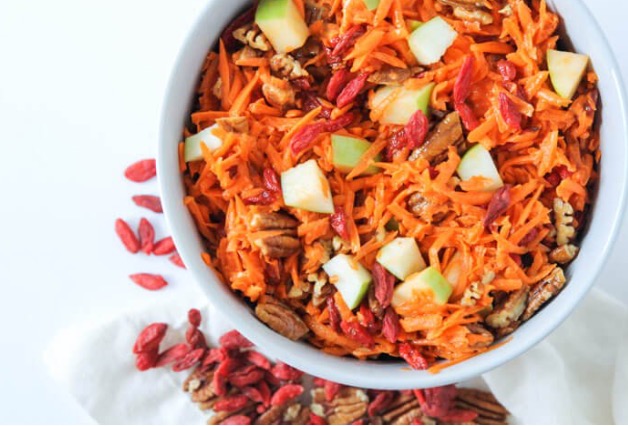
Dr. Axe Raw Superfood Carrot Salad
Salad:
10 large shredded organic carrots
1 cup dried goji berries
4 organic green apples, chopped (you can use any color or what is on sale)
1 cup pecans

Vinaigrette:
3 tablespoons Dijon mustard
¼ cup fresh squeezed lime juice
¼ cup maple syrup
1 teaspoon lemon pepper
1 teaspoon sea salt

Combine all salad ingredients and toss with vinaigrette in a large bowl. Serve chilled.

Asian Chicken Salad
Salad:
Handful of shredded kale, white cabbage or both!
2 slices purple cabbage
4 slivers of fresh ginger, roughly chopped
½ carrot, slivered
4 mini red bell peppers, cut into slivers
2 mini yellow bell peppers, cut into slivers
½ pulled rotisserie chicken, no skin
Handful of spring green peas, slivered
Handful of diced green onion
Handful of chopped cilantro
Handful of black sesame seeds
(Optional additions: red chili flakes, diced water chestnuts)

Dressing:
1/3 cup sesame oil
1 tablespoon rice vinegar
¼ cup water
3 tablespoons Hoisin sauce

Heat oil, then add other ingredients and whisk together for 3-4 minutes. Let cool before dressing the salad.
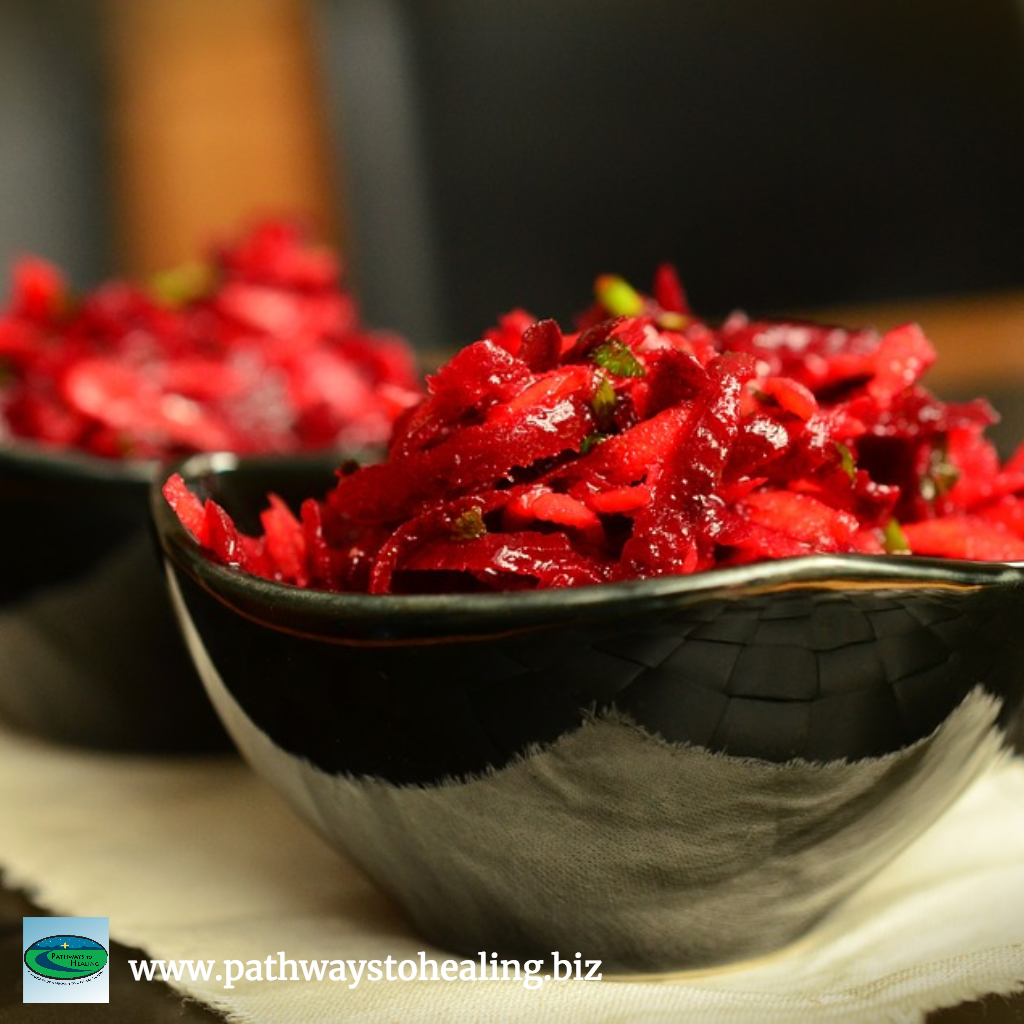
Balsamic Beet Salad
Salad:
3 large beets
5 ounces mixed salad greens
4 ounces crumbled goat cheese

Vinaigrette:
¼ cup orange juice
¼ cup balsamic vinegar
¼ cup extra virgin olive oil
½ teaspoon salt

Cube the beets and place in a steamer basket over boiling water with lid on. Steam the beets until tender, 10-15 minutes. Combine the salad greens in a bowl and top with cooled beets and crumbled goat cheese. Make the dressing by combining the orange juice, balsamic vinegar, olive oil and salt in a small bowl and whisk. Drizzle over the salad just before serving.

Pathways to Healing specializes in holistic chiropractic care. Dr. Alyssa Musgrove draws on a variety of techniques, including chiropractic, kinesiology, nutrition, food allergy testing and lifestyle counseling to assist clients in achieving optimal health and wellness in one setting. Pathways to Healing is located at 1022 Founders Row, Lake Oconee Village, Greensboro. The office can be reached at 706-454-2040.


Simple Steps to Improve Balance and Prevent Falls

By: Dr. Alyssa Musgrove – Pathways to Healing

Here are a few sobering statistics: One in three adults over the age of 65 has a serious fall each year. About 20 percent of women who fracture a hip become permanently disabled and another 20 percent die within a year.

While the elderly population is more prone to falls that can lead to serious complications, balance is important for all ages. Balance training can benefit everyone – whether you are older and want to improve basic day-to-day function or an athlete wanting to enhance performance and prevent injuries. With balance, it’s always best to be proactive. If we work on enhancing our balance and stability now, we can help prevent serious falls and injuries later.

The key to maintaining our balance is staying active. By staying active and continuing to challenge our balance, we can improve our overall stability. While improving balance will certainly help protect you from falls, it also can help improve overall mobility and fitness, while also allowing you to maintain independence and complete daily activities with ease.

Below are six strategies you can begin incorporating into your daily routine to help strengthen the muscles that keep you steady on your feet.*

1. Incorporate simple exercises. The following exercises help strengthen the core and lower-body muscles, which are critical for stability.

* Exercise 1: This move helps improve one-legged balance. With feet together, pick up one foot with the knee facing forward or to the side. (Be sure to keep a stable chair or wall within arm’s reach for safety.) Hold the position with eyes open, then closed. Switch feet and repeat for four reps on each foot. You can also try to do this while you are washing the dishes. Once you can hold the pose for 30 seconds on each side, stand on a less stable surface, such as a couch cushion. To increase the challenge even more, do it with your eyes closed.

* Exercise 2: The same sobriety field test cops give drunk drivers also improves balance. Take 20 steps forward, heel to toe. Then walk backward, with toe to heel, in a straight line.

2. Strengthen those knees. Knee strengthening exercises, like leg presses and lateral movements with the arms, can help build strength. As knee strength builds, it helps improve proprioception awareness with the mind and body, and also allows you to continue a movement or action in place far longer with proper form.

3. Consider Tai Chi or Yoga. Studies show Tai Chi participants were less likely to fall than those who took part in basic stretching programs or made lifestyle changes. Yoga works, too: According to Temple University research, women 65 and older who took twice-weekly yoga classes for 9 weeks increased ankle flexibility and showed more confidence in walking. That last part is important, says lead researcher Jinsup Song, PhD, “because when people are fearful of losing balance, they tend to do less to challenge themselves.”

4. Work your core. This table top exercise increases core strength, which is directly linked to your balance. Using a mat to protect your knees, get on all fours on the floor in table top position. Make sure the back is flat and the neck is aligned with the spine. While looking at the floor, raise and extend your right arm and your left leg at the same time. Keep a tight core. Hold for 3–5 seconds and repeat on the other side. Perform 10 reps on each side.

5. Focus on the legs. Sturdy legs can help prevent a stumble from turning into a fall. To build quads, start with a simple squat: With feet hip-width apart, bend knees and hips and slowly lower yourself as if sitting in a chair behind you. Keep arms straight out, abs tight, back straight, and knees above shoelaces. Stop when thighs are parallel to the floor or as close as you can get, then contract the gluteal muscles in your buttocks as you stand back up. Aim for three sets of 10, with a  one minute break after each set.

6. Sleep more than seven hours a night. A study at the California Pacific Medical Center showed how sleep deprivation reaction time is directly related to falls. Researchers tracked nearly 3,000 older women and found that those who typically slept between five and seven hours each night were 40 percent more likely to fall than those who slept longer.

By incorporating these techniques, you should notice improvements in your balance, coordination, posture, core strength and agility. Most importantly, you’ll help prevent future falls and be able to maintain your independence for years to come.

*It is always important to seek expert training and support when possible. Work with a physical therapist or licensed trainer to ensure you are selecting the right exercises to help you reach your goals safely and effectively. If you have severe balance problems or an orthopedic condition, get your doctor’s clearance before doing balance exercises.

Pathways to Healing specializes in holistic chiropractic care. Dr. Alyssa Musgrove draws on a variety of techniques, including chiropractic, kinesiology, nutrition, food allergy testing and lifestyle counseling to assist clients in achieving optimal health and wellness in one setting. Pathways to Healing is located at 1022 Founders Row, Lake Oconee Village, Greensboro. The office can be reached at 706-454-2040.

Benefit Of Nuts

By: Dr. Alyssa Musgrove

If you’re looking for a quick, convenient, nutrient-dense snack option, you really can’t do better than a small handful of raw nuts or seeds. There are a host of health benefits associated with eating raw nuts, which some experts even refer to as a “superfood.”

The Mayo Clinic notes that eating nuts can lower your LDL, or bad cholesterol, while improving the health of your artery linings.  In addition, nuts and seeds are an excellent source of protein, antioxidants, fiber, amino acids, minerals and omega oils. These nutrients boost heart, brain and digestive health, while fighting free radicals. The high fat and protein content of nuts also helps with satiety and controls hunger by stabilizing blood sugar.

Almonds are the most nutrient-dense nut. The almond skin is rich in antioxidants including phenols, flavonoids and phenolic acids. A study in the Journal of Agricultural and Food Chemistry revealed that one serving of almonds contains a similar amount of polyphenols as a cup of steamed broccoli or green tea! Almonds also have one of the highest protein contents of nuts, nearly one gram of protein per almond.

Brazil nuts contain a high amount of the trace mineral selenium, which is a powerful antioxidant and aids in boosting the immune system. It is believed that selenium can benefit heart health by its ability to fight inflammation and increase blood flow.

Cashews contain a large amount of oleic acid, a heart-healthy fat. They are also a great source of biotin, copper, iron, magnesium, and zinc.

Hazelnuts are rich in many antioxidants, as well as vitamin E, arginine and B vitamins.

Macadamia nuts have the highest protein concentration in one serving. They are also a great source of fiber, magnesium and potassium.

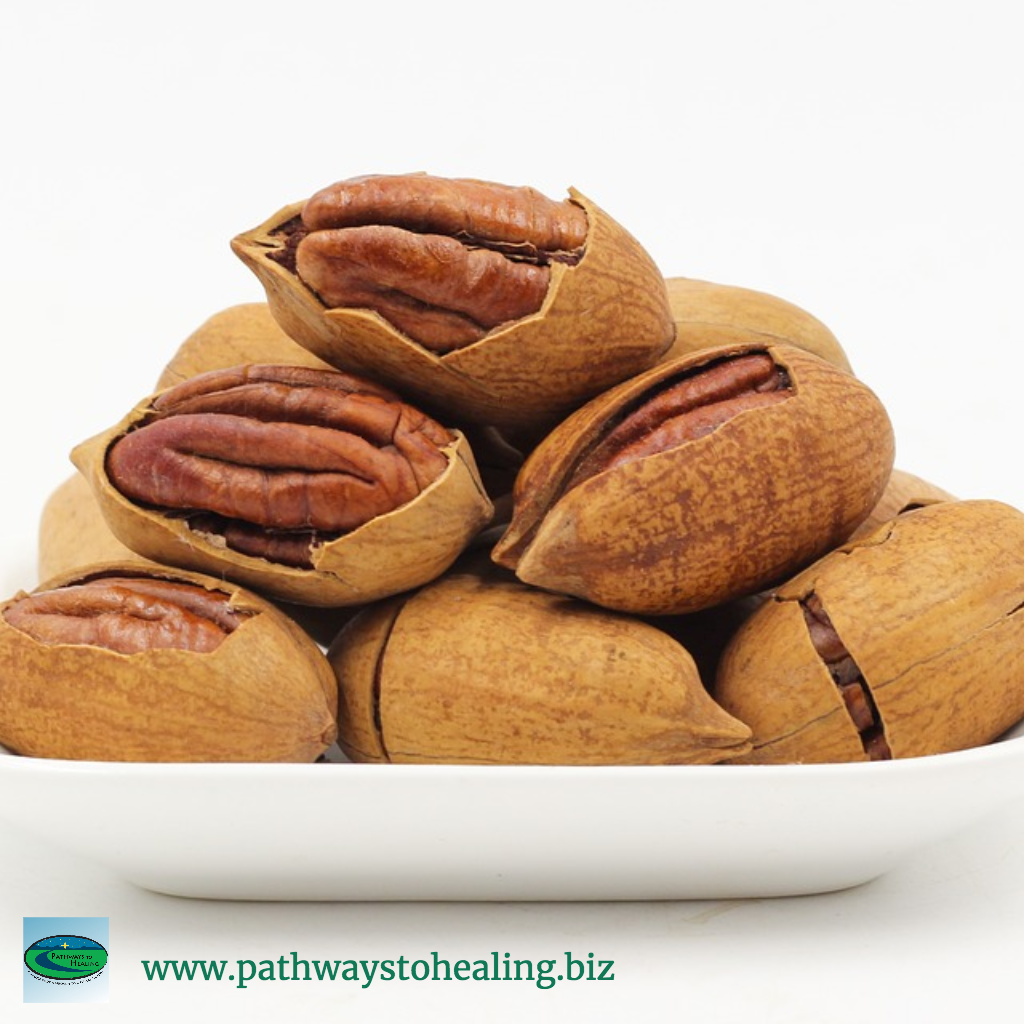
Pecans contain over 19 vitamins and minerals! They are second highest in protein content and include calcium, copper, folic acid, manganese, magnesium, phosphorus, potassium, zinc and include B vitamins, as well as A and E.

Pine nuts may help with weight loss because they contain pinolenic acid, which triggers the release of an appetite-suppressing hormone. Pine nuts are most often used in recipes to make pesto.

Walnuts have recently been hailed a “superfood,” due to high levels of omega-3 fatty acids, linoleic acid, vitamin E, and vitamin B6.  Pumpkin seeds are a nutritional powerhouse with a wide variety of nutrients ranging from copper and zinc to magnesium and manganese, and are also high in protein. The high zinc content in pumpkin seeds can boost prostate health.

(It’s important to point out that, although commonly viewed as a nut, peanuts are actually legumes and grow underground. For a variety of reasons, I do not recommend my patients eat peanuts.)

While nuts and seeds are very healthy, they are high in fat and protein. It is very easy to overindulge in nuts, eating too many servings (and thus consuming too many calories) in one sitting. One serving is considered one ounce. The following list details how many nuts are in a single serving. Eating a variety of nuts is your best bet, and moderation is crucial.

Almonds (20-24 nuts): 160 calories, 14g fat, 6g protein

Brazil Nuts (6-8 nuts): 190 calories, 19g fat, 4g protein

Cashews (16-18 nuts): 160 calories, 14g fat, 4g protein

Hazelnuts (18-20 nuts): 180 calories, 17g fat, 4g protein

Macadamia (10-12 nuts): 200 calories, 22g fat, 2g protein

Pecans (18-20 halves): 200 calories, 20g fat, 3g protein

Pine Nuts (150-155 nuts): 160 calories, 14g fat, 7g protein

Walnuts (14 halves): 190 calories, 18g fat, 4g protein

Pumpkin seeds (140 hulled) calories 153, 13g fat, 7g protein

When purchasing nuts, look for raw options. Roasted nuts are often processed in hydrogenated oils (a harmful fat source), which destroys the nutritional benefit nuts have in their raw form.  Additionally, roasted nuts are frequently coated in sugar or other unhealthy ingredients.  If you prefer roasted nuts and seeds, roast them yourself so that you can control the roasting temperature to keep the nuts as nutrient-dense as possible. Raw pumpkin seeds, for instance, can be roasted on a low-heat setting in the oven (no more than 170 degrees Fahrenheit for about 15 to 20 minutes), and sprinkled with Himalayan or other natural salts.

Nuts are a simple addition to your daily diet. Add pumpkin seeds to healthy sautéed vegetables. Sprinkle nuts on top of a mixed green salad for enhanced crunch. Add chopped nuts to hot oatmeal to increase the protein and fiber content. Eat nuts with your fruit and yogurt, or add to your granola. You can also create a simple pre- or post-workout snack by mixing nuts with dates and dried fruit for a healthy homemade 3-ingredient energy bar.  Or, throw together this simple trail mix for an easy snack on the go:

Superfood Trail Mix

Recipe courtesy of thehealthyfamilyandhome.com

  • 1 cup organic almonds
  • 1 cup organic cashews
  • 1/2 cup organic goji berries
  • 1/2 cup organic dried mulberries
  • 1/2 cup organic dried blueberries
  • 1/2 cup organic sunflower seeds
  • 1/2 cup organic cacao nibs
  • 1/2 cup organic coconut flakes

Combine all ingredients in a medium size bowl and toss well. Store in an air-tight container until ready to eat.

Pathways to Healing specializes in holistic chiropractic care. Dr. Alyssa Musgrove draws on a variety of techniques, including chiropractic, kinesiology, nutrition, food allergy testing and lifestyle counseling to assist clients in achieving optimal health and wellness in one setting. Pathways to Healing is located at 1022 Founders Row, Lake Oconee Village, Greensboro. The office can be reached at 706-454-2040.